20 July 2026
📩 the AI that runs your business, from your phone
Our latest product, AxleClaw: the AI that runs our business from my phone. The latest open-source model, context stays king when building, and the importance of critical thinking in a world where convenience has never been easier.
Sorry I’m a few days late, been sick and went down to Albury Wodonga for basketball (we won).
Howdy,
For the TLDR for today. Going to be running through:
Our latest product: AxleClaw: the AI that runs your business just by texting it.
The new open-source model that is beating the frontier labs
Builder’s notes: building the AI brain + merging the gap between personal AI OS and the business AI OS
Differentiated take: Maslow’s heirarchy of needs
Carve outs…
Enjoy :)
💼 1. What’s new in the biz
We just launched an ad campaign for our latest product, AxleClaw: the AI you can text from your phone. It connects to your apps, learns about your business proactively, runs 24/7 and gets smarter over time.
Things it can do: competitor analysis, code (makes websites), reporting, checking in on employees, following up on leads, sorting your emails, and so much more. If you want something done? Just ask it!
And you can just text it from your iMessage!
AxleClaw - OpenClaw Without the Hassleaxleclaw.aiIt will also proactively nudge you throughout the day to keep you on track. As a founder, I know this has been immensely helpful to check in on projects, employees, etc.
Ultimately, the campaign has been up for a total of 3 days, which means I have exactly zero meaningful numbers to report lol.
One early signal is already clear though: the founder-led stuff outperforms the polished stuff. The VSL-style creative where it's just me talking beats anything that looks produced. At this stage of a business, people don't buy from a brand. They buy from a face. So we're leaning into it.
Same lesson is reshaping the socials. Less "here's a slick take", more of the actual pain points we see inside businesses, and more of what's really happening in ours: the building, the trials, the stuff that doesn't go to plan. Have had a few people reach out directly which has been cool.
Instagram post
If you (or know anyone you know) is constantly stuck in the weeds of trying to run their business and wants their own AI that they can talk to via their iMessage which will proactively do work for them, lmk! Would love to get them to test it out :)
We’ve hit over 500 subscribers on the newsletter! Last edition I said we were almost there. We're there. Genuinely, thank you, especially the people sharing it around unprompted.
Building-wise, we’re really looking at a productised business brain that sits as the business brain that plugs into personal layers. Closing the gap between the personal AI OS and the enterprise AI OS I think is where things are headed. The hardest part is ensuring context doesn’t get muddled, but right now I feel like our internal tools are getting there.
More on this below for what that means and why it matters (in the Builder’s tools section)
🤖 2. What’s new in AI
Moonshot AI released Kimi K3 on July 16, and it's the most interesting model drop in months. At roughly 2.8 trillion parameters it's the largest open-weight model ever released, with a one-million-token context window, and notably it seems to be out-performing the frontier labs
A lot of numbers in that sentence I know. To break it down.
Moonshot AI is a Chinese lab. They have their own LLM product called Kimi (just like how OpenAI has ChatGPT or Anthropic has Claude). And they just released their most recent model Kimi K3. It currently sits at number one on Arena's Frontend Code leaderboard at 1,679, ahead of Claude Fable 5 (1,631) and GPT-5.6 Sol (1,618). Not that these numbers probably mean a whole to a lot of people - but why it’s huge news is because it is (to my knowledge) the first time an open-source model has been at the top of the AI benchmarks.
To put this in more real-world terms. There’s a guy called Max Weinbach who prompted K3 to rebuild macOS 27 "Golden Gate", Apple's upcoming operating system, as a fully functional web app. Liquid glass effects, native apps, the lot. It finished in about three hours and twenty minutes. You can click around the result yourself, and his thread is worth the scroll.
Twitter tweet
I know it seems like there are new updates every weekend, but this feels genuinely insane. Like what? This was done with no human supervision in 3.5 hours. Incredible.

Caveat: that's one leaderboard, it's frontend-specific, and it measures which output people prefer, not which model runs your business. Worth noticing too that Anthropic still holds nine of the top twenty slots.
But an open-weight model at the top of any frontier leaderboard is a milestone.
If you read edition 04, this helps to strengthen the "all roads lead to open source" argument I made. The gap between open and closed keeps shrinking, and every time it shrinks, the model itself matters a little less and what you build around it matters a little more.
Quick hits: also new in AI
- Australia finally has an AI plan. The PM announced mandatory AI Standards, a new Office of AI, and a promise of "the strongest possible protection" for creators against uncompensated training. With that said, legislation isn't due until early 2027, and artists rallied at Parliament House the same day calling the pledge hot air. For now it's direction, not obligation. Nothing changes on Monday, but the compliance era now has a start date. ([PM's announcement](https://www.pm.gov.au/media/ai-australias-interests), The Conversation's read
Having said that I’m generally bearish on this - I assume the government will be much slower to act than the private markets will. I also don’t think they will be able to outline what is needed in order to properly regulate AI.
- On the contrary this past Tuesday, DeepMind's Demis Hassabis published a proposal for a US-led AI standards body modelled on FINRA (Financial Industry Regulatory Authority), the outfit that polices stockbrokers. Not a government department: a set of tests. Frontier labs would submit models up to 30 days before release, and the body would probe for dangerous capabilities, cyber risk, and whether the guardrails can be jailbroken. It starts voluntary, and once the testing regime proves itself, passing becomes the price of admission to the US market. Industry-funded, independently run, a board heavy with Turing Award winners, and he wants it live before year-end.
I think this is probably more dynamic and allows for greater adaptability as these things are bound to change.
 DeepMind CEO calls for an independent standards body to regulate frontier AI | TechCrunch
- The labs are betting the money is in implementation. Anthropic and Blackstone launched Ode, a $1.5B enterprise AI services firm, a week after OpenAI's Deployment Company bought another consulting outfit. When the people selling the models start building services firms around them, they're telling you where the value actually sits: making this stuff work inside real businesses. This is exactly what I mentioned in the previous edition - the value is accruing more to those that solve actual real-world use-cases rather than just models themselves. People really struggle with the blank canvas problem - of “not knowing what they don’t know.” So we will see over the next few years more players moving into this space and the value accruing there.
But, no complaints from us.
- OpenAI shipped ChatGPT Work: give it a goal and it works for hours, coming back with finished docs, sheets and slides instead of chat replies. The "agent that finishes the job" race is officially on. Tbh it feels like a new version of this gets released every two weeks - it’s honestly hard to keep up. But assume this is targeted at capturing some market share that Claude Cowork has captured. It hits the nice segment of people who want more capability, but are scared of hopping into a terminal.
👷 3. Builder’s notes
Two Claude Code commands that changed how I think about delegating work to AI this week:
*/loop** runs a prompt on a repeating schedule. "Check the deploy every five minutes." "Run the morning brief at 7am." It's the difference between an assistant you have to poke and one that keeps showing up.
*/goal** is the bigger shift. Instead of prompting steps, you declare a finish line: "keep going until every test passes", "work through this backlog until it's empty." Claude keeps planning, building and checking its own work until a separate verifier confirms the condition is actually met. You stop supervising tasks and start defining outcomes.
Having said that, all of this probably doesn’t make that much marginal difference for the average person.
What it all comes back to: context.
We’ve built out our own internal AI brain: an ingestion layer that takes in everything the business knows (meetings, docs, CRM, chats) and indexes it into a memory layer that any AI can plug into. Claude today, ChatGPT tomorrow, whatever's best next year. The models are swappable. The memory layer is yours.
But then what about having personal memory on top of the business brain?
That’s the part we've added in too. The idea is that you have one underlying business brain and then personal context for each person when they log into Claude (for example) or if we set it up on their own personal context with a product like AxleClaw. Same company knowledge underneath, individual assistant on top.

🧐 4. Differentiated take: the importance of critical thinking in a world where its never been easier to outsource intelligence.
I think ensuring critical thinking in a world dominated by AI is one of the highest leverage skills that is available today.
AI as a tool can do one of two things. It can help you learn faster, or it can remove the learning for you entirely. Same tool, opposite outcome, and the difference is entirely up to you on how you use it.
I think about it like machinery and manufacturing. Machines took over the heavy lifting on factory floors, and it was obviously good, nobody's arguing for going back. But it also meant human bodies stopped getting worked in the way they used to just by living an ordinary working life. That created a gap for physical exercise: a market for a place you'd go specifically to load weight onto your body on purpose, because your day no longer would. That gap is why gyms exist.
I think something similar is coming for thinking. AI is going to take over more and more of the cognitive heavy lifting, and most of that will be a genuine gain. But it'll leave a gap where critical judgement used to get exercised by default, just by doing your work and living your life. And I'd reckon the response looks the same as it did with physical labour: dedicated places and dedicated practices whose entire purpose is making sure the muscle doesn't atrophy.
We're already seeing the early version of it in schools. Waldorf schools have run screen-free for over a century on the belief that passive tech use undercuts a kid's own imagination and judgement before either has had the chance to develop. Sydney Grammar's more interesting to me because it's not a ban. Their own line is that AI use is "less about frequency and more about professional judgement and purpose", which is exactly the distinction I'm circling: not whether you use the tool, but whether you're still the one doing the judging.
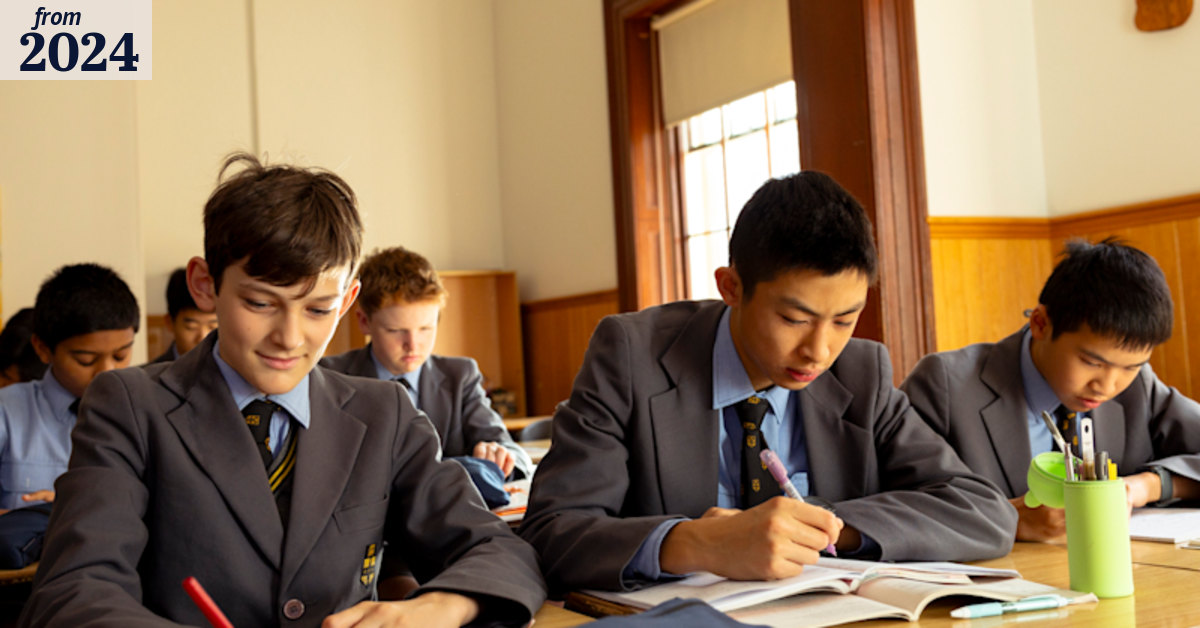 ‘Ultimate distraction’: Why this top Sydney school has resisted screens in class
With that in mind, maybe this is just what every new tool looks like on the way in, and in fifty years nobody will remember worrying about it, the same way nobody worries that calculators ruined arithmetic. Maybe. But, judgement might be different, because judgement is the point of almost everything else. If we remove that, then what?
My honest guess is both things happen at once. Over the next couple of centuries, I think we fuse with this technology more than we currently think is possible. And at the exact same time, I think we'll see more and more places that deliberately wall AI out, precisely because fusion elsewhere makes those walls necessary. Convenience is not obviously the goal. The tool should be an accelerant on your own progress, not a substitute for making any.
It's part of why I still write this newsletter by hand every week, thoughts first, tools second. Going through what was good, what wasn't, and what I'd actually keep from the week is, I think, an important process for me.
🎶 5. Carve outs:
⚽ Sports:
Basketball season has ended for us (missed out on finals) - so back to the off-season grind
I actually love the world cup (sad to see it end)
Kyle Kuzma is into investing now? https://www.linkedin.com/in/kylekuzma/
📖 Books:
Leonardo by Walter Isaacson - biggest takeaway thus far: question everything. Cool guy who grew up just questioning everything
Otherwise that’s all from me,
Stay classy,
Until next week
Alex