12 June 2026
📩 the inaugural newsletter
The first newsletter! Breaking down what's new in the biz, what's going on in AI and my (somewhat) differentiated take of the week.
What up people,
Thanks for being a part of the newsletter (and the first edition).
For the TLDR here’s what’s good. Going to be running through:
what’s new in the business.
what AI tools I’m using (and new stuff in AI) +
my thoughts on the NDIS budget.
Enjoy :)
💼 1. What’s new in the biz
So this week was a cool week.
We have now officially solidified our core products. One thing we’re trying to do more as we scale is to productise.
Productise, productise, productise. (really keen on productising if you couldn’t tell).
Over the last few months, we’ve essentially been getting paid to do discovery. Clients will tell us their problems and we try and solve them. But we need the solutions we create to be systemised, so we’re able to increase the time to value for each client + reduce cognitive overload we would endure due to context switching. Accordingly, we’ve settled on essentially 3 core products.
We've launched our fully autonomous executive assistant, AxleClaw: 1-click deployed OpenClaw. It connects all your business apps and it can run 24/7 to do (pretty much) what your heart desires and gets smarter over time. Think daily reporting, summary of the day and week's work, Meta ads analysis, website deployment and updates. Plus you can connect it via your phone (we’ve just launched iMessage capability!) and get it set up all in less than 10 minutes. It will also run an accountability check each Sunday to see how well you're performing compared to the goals you laid out. We're calling it AxleClaw and having beta users test it currently. Think of it as a second brain for you (really helpful for founders). I use it to just dump voice notes in and then get it to action items.
See website here: axleclaw.ai

See here for a breakdown from Swanny (my co-founder):
We audit, build and optimise. This is our core offering. Essentially we'll go in, interview people, try to understand where inefficiencies might lie and then roadmap out what an AI implementation plan could look like for them.
We often find people (and companies) don’t know what they don’t know so the audit process is almost necessary at each step.
We then build out the agents we roadmap for people, working through a phased plan to ensure any changes aren’t too drastic.
And then we optimise. We implement self-learning feedback into the agents so they can recursively improve over time. Think of edge cases that might occur, things that go wrong. We give our clients the ability to give feedback on the agents and then have them improve themselves over time. Getting smarter the more they are used in the business.
More recently we’ve been doing education. We've started building out workshops for companies to help them understand what AI is, how it can be used effectively and what it can look like long term. At first we were super hesitant about this but after more and more demand, we have started doing these. They're typically 3 hours long with secondary drop-down hours for Q&A and build fixes with people.
We may have in-person live workshops for teaching people how to use Claude Code, Cowork, Codex coming over the next month or so.
We also have 2 employees! (will be intro'd in the next newsletter).
One thing I’ve found to be quite ironic is ensuring we constantly automate our manual processes.
For example, onboarding for us was too manual, so we're streamlining it and ensuring that this is an agentic workflow, with the agreements, contract and timeline plus agent build dashboard all one click away for our users.
Will be sharing these builds as we go.
🤖 2. What's New in AI (and What I'm Actually Using)
Most of what gets hyped in AI is theatre (if you’ve seen those stupid Jarvis voice-activated setup you know what I’m talking about)
Some of it is genuinely good. Most of it isn’t :/
Here's where I've landed in the last week.
Mythos (or actually Fable) just dropped. Claude’s new flagship model. this is the one that they were scared to release because of cybersecurity threats, which I find a little ironic considering all of their code got leaked while they were using it internally. With that said it is pretty cool. Very early days of using it but note it is, 2x more token-heavy than Opus 4.8 (which already chews tokens). They're also only allowing flat-fee subscription access until the 22nd of June, so about a two-week period to abuse the subscription. I assume it's because they want to get feedback as much as possible on the new model, but then they're going to be charging it at API costs, which is going to be super, super expensive. (essentially they are subsidising the cost of using it pretty heavily over the next 2 weeks).
So I would highly recommend using it in the next two weeks as much as possible.
I think the biggest differences are in the deep long work from everything that I'm seeing. For the most part, it doesn't seem to really make much of a difference. it's really where you have tasks that, loop, but for the everyday person, it's probably not really making much of a difference. It also seems to be better at design, which is pretty cool. See example below of a website that was created with it.
Cairn — Security you can rest oncairn-site-pied.vercel.appOne thing that is interesting is that Anthropic is proclaiming that they are on the verge of AGI and have asked for everyone to pause AI development (convenient since they are quite recently the largest projected AI company in the world). I think two things can be true at the same time - they want AI development to slow down and this also happens to be seriously good marketing ahead of their projected IPO later this year.
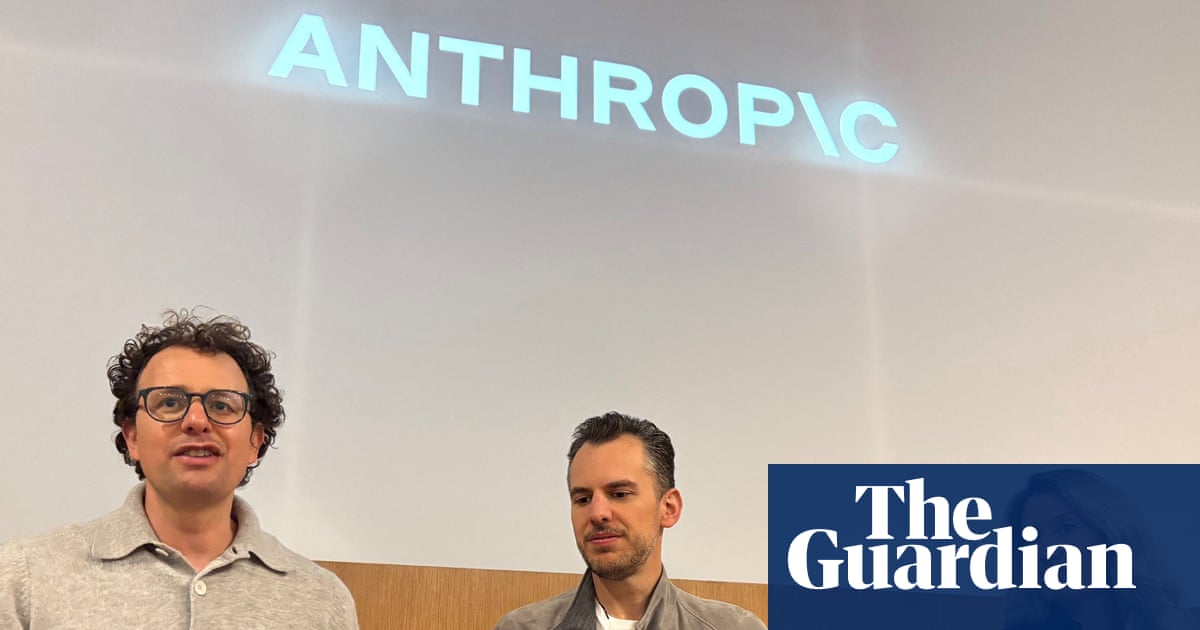 Anthropic says the world should have option to ‘pause’ on AI
One interesting to note, the Fable model they dropped has been specifically designed to not allow any recursive or “how-to-create-my-own-better-model” type of prompting. Makes sense, but convenient of them to frame this modified version released to the public as “preventing cyber-security risks.”
SpaceX is going public.
After two decades as the most valuable private company on earth, SpaceX is filing for a June 2026 IPO at a $1.75 trillion valuation. The plan: sell roughly 555 million shares near $135 each to raise about $75 billion. Notably, up to 30% is earmarked for retail investors, far above the usual 5-10%. Musk is letting the public in, not just the institutions.
The story underneath the rocket is Starlink. The satellite internet unit now drives the business: 61% of revenue last year, climbing to 69% in Q1, and it was the only division that turned a profit ($4.42 billion). Consumer subscribers more than doubled to 10.3 million.
The catch is that growth gets harder from here. Average revenue per user is sliding just as Starlink pushes into cities and suburbs, where it runs into entrenched terrestrial broadband. The easy customers (rural, remote, underserved) are largely won. The next leg is a fight.
Bottom line: the market is being asked to price a rocket company on the strength of an internet company, right as that internet company hits its first real competition.
Codex (semi-recently) went all-in-one. OpenAI turned it from a coding tool into a general work agent. It can now drive your computer, use the everyday apps on your machine, review PRs, run its own browser to check the frontend it just built, remember your preferences, and take on repeatable jobs.
Little bit nicer than Claude with Claude Code, Cowork and normal Claude (most people don’t actually know what the difference between Claude Cowork and Code is). Codex has also since bolted on role-specific plugins and shareable hosted apps.
Also OpenAI launched Sites, which is honestly super cool. Claude has artifacts but sites handles all of the back-end. So you can literally just deploy a whole website in minutes, have it handle all the data input and voila you don’t need to worry about backend. Have already recommended it to a number of my more non-technical friends.
Spokenly is sickkkk. I’ve been tempted with using something like WisprFlow but honestly just didn’t want to pay another subscription (plus could get away with voicing in Claude and Chat). but Spokenly is awesome. It's a free open source tool that basically works the exact same as WisprFlow, and you can bring your own local API key, super easy to use. (I just wrote this out by speaking into Spokenly lol). For those that don’t know, it just allows you to transcribe super easily into what ever interface you’re trying to type into. Works on your phone and laptop.
 Spokenly: Free AI Dictation App for Mac, iPhone & Windows
My Actual Work OS
Ditch Claude Desktop. Use Claude Code in VS Code. The desktop app just keeps breaking, and the thing that really winds me up is you can't easily see your skills (only in Claude Cowork). In VS Code I can watch which skills are being created and track them as they're built. That visibility alone is worth the switch to me. But the main thing is it breaks way less which is great. And the compound increases overtime.

The desktop app is really good for projects (purely because of the way it holds and condenses memory and context). The bit I love most is the memory-condensing: it holds onto the context that matters and drops the noise, so I'm not re-explaining myself every session.
Nate Herk runs through this setup really nicely.
But for 24/7, do-it-while-I-sleep work, I still lean on OpenClaw. It's there whenever I want it to go and do something for me, and I don’t have to worry about keeping my laptop open. I find Hermes solid and it breaks less often, but it's really built for single-agent work. OpenClaw's multi-agent setup is far easier for me to configure. The catch is the one everyone hits with multi-agent: the agents don't share enough context, so they drift. Working on trying to fix this.
BS I'm seeing way too often
The Obsidian "second brain" stuff. I get the appeal: a pretty graph of all your notes connected by glowing lines. It photographs well. But every one I've looked at is an elaborate way to feel productive without being productive (caveat this by saying - for the most part - I still use and am using it more).
A visual workflow isn't the same as a working one. For most people it’s not the most pressing issue they need to solve. You need structural outcomes.
The main thing I really want to knuckle down is context. For everything. AI is only as good as the data you give it. The more context you can give it, the better. Now these graphs and tools can help with that, the only reason I caution against them so much is because people usually should focus on more pressing repetitive tasks before trying to set this up.
With that said, I will be dropping a how-to guide on setting this up (so stay tuned), so that your context compounds over time.
I think moving forward there will be the AI brain for founders and individuals and then the AI brain for the enterprise. We’re looking to productise both and be able to have 1-click deployments of these. I think that’s where the future is heading.

With that said, don’t even get me started with the "Jarvis" builds all over your feed. Everyone's showing off their personal AI that controls their lights and reads their emails back in a calm voice. Fun demo. But the token burn to keep one of these things live and useful is frankly absurd. It's a great way to spend a small fortune turning your lamp off. Cool engineering, terrible economics.

👷 For the builders: cool products, apps I’m seeing and using (not affiliated FYI)

Fastlane is the one I'd flag for indie hackers and solo founders. You point it at your website, it learns your product and your tone, and generates short-form video you swipe through Tinder-style and schedule straight to TikTok, Reels and Shorts. If you've built something good but have no time to market it, I think it's a useful distribution machine: on-brand content without standing up a content team. I’ve shouted the boys out before on my LinkedIn (I happen to be mates with the founders), but they just hit $1mil ARR in the last 2 months so gotta show them some love again - shoutout kings!
Spokenly (already mentioned above, but for a free alternative to WisprFlow check it out)
🧐 3. Differentiated Take of the Week: The NDIS Budget Is a Proxy for the Care We No Longer Have Time to Give
There has been much chatter about the NDIS, particularly recently. It has become more of a cultural conversation with the proliferation of media covering scammers who abuse the system. My take isn’t so much about the rise of fraudulent behaviour, but rather what the NDIS represents in a modern-day capitalistic society.
When the NDIS was started, it was a noble idea: to give the same baseline of care to people who can't care for themselves, to everyone, regardless of age, race, background or financial situation.
The budget has since blown out to gargantuan proportions. But my claim today isn't about that fiscal immaturity. It's about what the blowout represents for us as a society.
I was recently reading Homo Deus by Yuval Harari (a fascinating read, if you haven't already).
He gives an example that has stuck with me - see screenshot from my mate Amey who I was discussing this topic with.

A software engineer earning $250 an hour at a hi-tech start-up has a father who suffers a stroke; overnight he needs help with shopping, cooking, even showering. She could move him in and care for him herself: her income and the start-up's output would take the hit, but her father would have the company of a loving daughter. Or she could hire a carer at $25 an hour to live with him and meet his every need. As Harari frames it, the second option means "business as usual for the engineer and her start-up", and, on paper, everyone comes out ahead.
Harari names something I'd only ever talked about with a select few: the dilemma of specialisation. We live in a world that rewards you for optimising one narrow skill, and the better you get, the more the world, and then you yourself, values that skill above almost everything else, including the care of the people closest to you.
A software engineer creates more measurable value at a keyboard than at a parent's bedside. So that's where they go.
Reading it, I agreed with him, and then questioned why I did.
I run two businesses, play basketball semi-professionally, and try to hold onto some semblance of an intellectual and social life. I also have a sister with special needs. I cannot, in any honest reflection, chase everything I've set out to do and personally make sure she is looked after at all times. Something gives. It's usually the time spent with my sister.
We may tell ourselves the NDIS is proof of how much we value caring for the vulnerable, and it is. Its mere existence is generally a morally good thing (caveats for its ballooning expenditure and scammers who abuse the system). But more specifically, the budget isn't a measure of how much love we give our own; it's a measure of the gap left behind once specialisation pulled us away, the price of buying back, at scale, the care we no longer have the hours to give ourselves.
It exists because the rest of us are at the keyboard, or specialising in a facet of life we have more leverage in, and can produce a greater benefit to society.
I've lived out of home for a while now. Every time I go back, I'm reminded of the one axiom I cannot out-optimise: everyone I love is getting older, and time is finite.
I'm not the first one to recognise this, and I won't be the last. Nor is this some ground-breaking revelation of the world. It is just something I experienced.
I don't have a tidy answer to this existential angst. I haven't given up my goals, and I'm not going to pretend I'm about to. But I've made my peace with this much: in a world that pays you to specialise, the time you spend on the people who will never show up on a balance sheet is the one allocation you'll never regret.
But I figure, on my deathbed, I’ll probably never have wished I spent more time at the office.
So say hi to your mum next time you see her :)
🎶 4. Carve outs
📚 Books I’m reading at the moment:
Jobs by Walter Isaacson
Can’t Hurt Me by Goggins (just finished)
recommend reading both
🎵 Playlists:
Been bumping the Drake album, Iceman, lowkey
Otherwise the Claude FM station goes hard
Also, listening to TV soundtracks on YT (idk if anyone else has experienced this, but the succession one goes crazy).
Until next week amigos,
Peace,
Alex