6 July 2026
📩 how to connect claude to multiple emails
Connecting to claude via its connectors can be a bit grim. Use Composio instead (you can add more than one email acct for example). Redesigning client demos and marketing. Where I think the value accrues in the world of AI. And finishing the Steve Jobs book.
P.S. Sorry I’m a few days late, business has been hectic this week, promise we’ll be returning to Friday publications this week.
What up y’all,
Here’s the TLDR:
redesigning the interface for our FoundersOS product + redesigning our client demos.
how you can connect anything to claude (even multiple email accounts)
where I think the value of AI accrues
and thoughts post finishing the Jobs bio
Enjoy :)
💼 1. What’s new in the biz
We've streamlined the whole sales process around a set of interactive demos.
It runs on a skill I built called command-centre-demo, before and after every meeting. It pulls the Fathom transcript from the call, cross-references it against what we already have in the CRM, then goes and reads the prospect's website and does a quick pass on their industry. Every pain point that came up on the call gets turned into a demonstration. Two things, really: a visual of what one of their workflows would actually look like and how it'd run, and a clear way for them to see the time they'd save.
See an example of the command centre dashboard here:

The point is simple. People struggle to picture how AI fits their business until they see their own workflow in front of them. So now we show them instead of telling them.
We also redesigned the one-click openclaw setup. We stripped the interface right back: less cluttered, much simpler, and far less technical. It's built around exactly what the founder wants to get done, not every feature it could possibly show them.
(Prototype below)
I think this is pretty cool. It proactively scans all the apps that are connected and then takes action on anything that is lagging (literally reminded me to follow up with someone I had forgotten and drafted the message and sent it without me asking).
Basically like an awesome executive assistnat that plugs to all your apps and can do things without having to do anything.

On the ads: Facebook stopped our account from processing ads, for reasons that still aren't clear to us. We're (hopefully) getting it started again on Monday. The good news is we've got cost per lead down to about $30-$30, and the plan is to double the spend the moment it's back on.
And I'm on a mission to put more genuinely useful stuff out on socials. More on that soon.
🤖 2. What’s new in AI
Google's Gemini inside Workspace is (quietly) pretty good.
Recently we bought the Gemini Workspace deal, honestly because we needed breakout rooms for one of our workshops. It's better than I expected. Because it's baked into the whole Google suite, Gemini can see the context of what you're doing and suggest fixes that actually make sense. Even writing this, it's helping me tighten what I'm trying to say without flattening it into someone else's words. It keeps my voice instead of replacing it. Plus meeting recording comes with it.
Quick hits: also new in AI
- OpenAI offered the US government a 5% stake. Around $42.5 billion, in line with its most recent valuation. The company is handing Washington equity to take the political heat off ahead of its listing. At first one might think this is a charitable endeavour but honestly think this is being pursued to allow for the IPO to run a little nicer. Hard to fail too if the US government has the incentive to see you succeed.
- Meta has too much compute and is trying to offload it. After spending enormous sums building out capacity, Meta now has more than it can use and wants to sell the excess. Which basically suggests that the demands for its AI usage are calming down a bit. Some are reading it as an early sign the build-out is running ahead of real demand, and a possible cool-down in AI.
- OpenAI released its first custom chip, Jalapeno. Built with Broadcom, aimed squarely at cutting its dependence on Nvidia. The interesting knock-on: if the labs start making their own silicon, Nvidia has every reason to go the other way and start building its own models. (And I think this the way we are going to be moving forward with Nvidia being the leader in open-source in the US and beyond. More on where that road leads below.
- Fable 5 got re-released: A couple of weeks ago it got pulled days after launch by a US export-control order. That order has now been lifted, and Fable 5 is live to the public again. The frontier tightened and then loosened inside a month, which tells you how unsettled all of this still is. Only problem is that it has been reported that it has been completely nerfed. Specifically, it often demotes itself back down to the Opus model for tasks that seem pretty rudimentary.
One other thing - they’re letting you use it on a subsidised basis until July 7th (at which point they pass through the cost via calling the API) so would recommend abusing it before then, however its reserved only for paid plans :/
🔧 3. Builder's hack: how to connect claude to multiple emails
If you're building anything real with Claude, you hit a wall pretty fast. It can only reach the handful of apps it ships with. Plus you can’t even autonomously send emails with Claude (super frustrating!) Most people stop there and work around it. The better move is to put a layer in between.
The one I use is Composio. Instead of hooking up each app by hand, you connect Composio once and it gives you a few hundred connections on the other side, plenty of them things Claude won't connect to directly.
Now maybe that sounds a bit confusing - but the great part - you can connect more than one account of the same app. Most people have two or three Gmail inboxes, and Claude doesn't let you wire those up nicely. Through Composio you plug all of them in and the agent works across the lot instead of making you choose. If you run your business out of a few inboxes like I do, that alone is worth it.
And the real value isn't the number of apps anyway, it's the login. The slow, painful part of connecting anything to AI was always the auth: the tokens, the permissions, the re-authing every time something breaks. Composio handles that once and every app you add inherits it.
Just a heads up though. You're giving a middleman access to your accounts, so bear that in mind before you connect anything sensitive. For everyday use, or when you're stuck trying to connect an app Claude won't touch, it's very, very helpful.

🧭 4. Differentiated thoughts: All Roads Lead to Open Source
For the past couple of weeks I have been asking myself this question: where does the value of AI accrue? Over the past couple of weeks, I’m starting to think: All roads lead to open source.
Here's the simplest way I can put it. A defensible business usually has moats. In the case of AI, I was curious in trying to view it through the lens of other technological revolutions, and particular analysing it through the themes of switching costs and network effects (which have dominated recent tech revolutions). Social media had both. E.g. I stay on Instagram because everyone I know is on Instagram, and leaving means starting from zero. The iPhone had switching costs: your photos, your apps, your whole life lives in there. These factors contribute towards building moat, and the moat is where the money pools (note I say all of this while these companies near a trillion dollar valuation, so its not to say that they won’t be wildly successful). But notably, these types of businesses end up accruing a large portion of the value.
LLMs, however, have neither.
I get no extra value from my friend using Claude. There's no network effect, I don’t gain any additional utility because my friend uses it. And there's barely any switching cost, because moving from one model to another is a copy-paste of your prompt (or simply asking your LLM to pack up all your context and give it to you as a .md file + it’s fairly simple to set up a model-agnostic setup as I’ve outlined in previous newsletter editions). I've swapped between a few different models just this past month and felt nothing. When a product has no lock-in and no network, price (and quality obviously) are one of the few levers left. Price races to the floor. And the difference in quality between the frontier labs and the open source models is diminishing. That's a commodity.
The labs know this, which is why they guard the frontier so hard (and that’s the obvious counter-argument to this frame - if your model is consistently that much better than your competitors then that’s your moat and differentiator), but even that's leaking. Take distillation. A rival doesn't need to outspend you, it just needs to ask your model enough clever questions to pull the valuable reasoning out of it, then train its own model on the answers. You spend billions discovering something and someone copies the homework for a rounding error. It's very hard to defend against, and it keeps dragging the frontier back toward the pack. (And yes, distillation is very much happening)
 Distillation: The New U.S.–China AI Fight
Alex Karp went on CNBC last week and put the enterprise version of this more bluntly than I could. His claim is that something has gone completely wrong with how AI is being sold. Serious companies have worked out that when they pour money into frontier models, in his words, "these people are stealing the weights and alpha of my business." They pay for tokens, hand over their data, and train the very thing that could one day replace them. What they actually want, he says, is to "own the means of production," their compute, their models, their data, their edge, rather than rent it from someone who's also studying them.
He puts forward a vision for large enterprises to employ companies (like Palantir and Nvidia) to implement these open-source models, weightings, etc on the companies own GPUs.
He also posited a good question: if this intelligence were really as valuable as it's sold, why charge by the token at all? If I could genuinely make your business a billion dollars, I wouldn't bill you per token, I'd take a cut of the billion. The fact that models are priced like a metered utility, and not like a partner in the upside, tells you what they actually are.
So where does this leave us? Think about electricity. When it spread, the value didn't pool with the handful of companies generating it. Nobody thinks of the power company as the seat of power. It spread outward, socialised in a sense, and the electricity itself became a commodity you never think about. The fortunes went to the people who built things on top of cheap, everywhere power, not to the ones generating it. I think AI (or the frontier labs itself) may be heading the same way. The intelligence becomes electricity: cheap, everywhere, owned by no one (hopefully anyway).
There's a fair rebuttal, and I'll steelman it. The frontier might keep sprinting far enough ahead that closed stays worth paying for, and open is always the year-old version. Maybe. But you can't put a commodity back in the bottle, and every force I can see, price, distillation, the pull to own your own stack, points the same way.
I’ll also add that the price of these models is becoming increasingly hard to justify for enterprises. Microsoft itself has curtailed AI expenditure (same as Meta). So even if the models are better - paying 100x than an open-source model just doesn’t offer enough marginal benefit, to warrant paying for the frontier models.
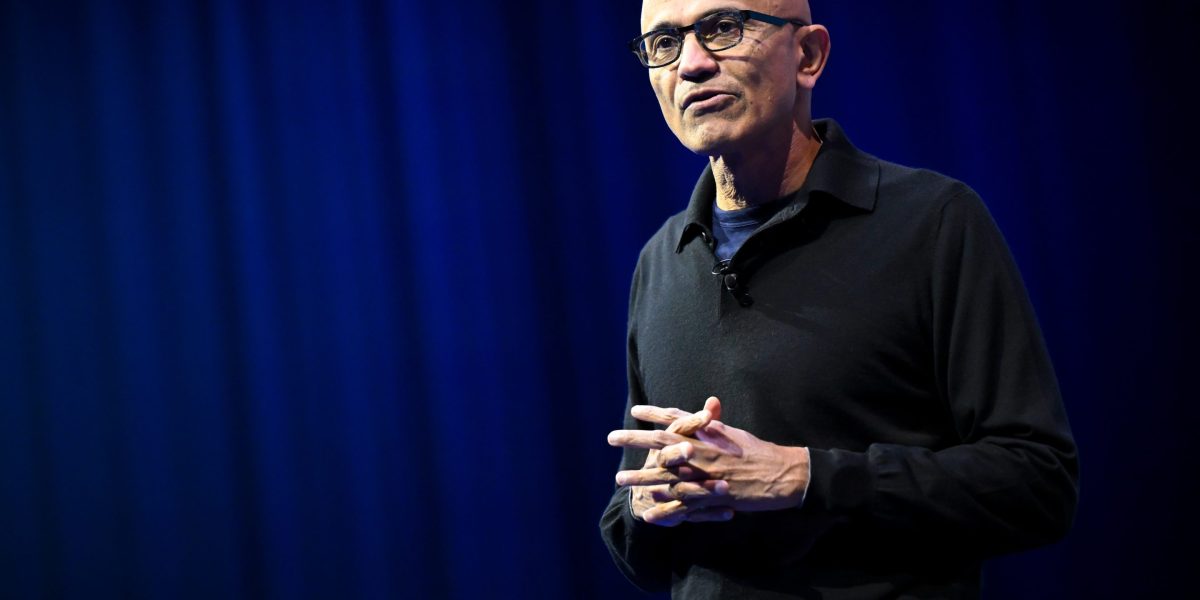 Microsoft reports are exposing AI's real cost problem: Using the tech is more expensive than paying human employees | Fortune
The value doesn't vanish when the model commoditises. It moves up a level, to whoever builds something specific on top that can't be copied (which as you’ll notice is where the labs are heading, Claude has released Claude Science, Claude Legal, Claude Finance, Claude Code, Claude for Healthcare). Which is the same answer I keep arriving at from every direction. When the powerful thing gets cheap, the prize is what you do with it that nobody else can.
If you want the fuller version, Karp's interview is worth seven minutes, and the recent All-In episode with Chamath and the Dwarkesh conversation cover the same ground from the investor and economist seats.
🎶 5. Carve outs
I just finished the Steve Jobs biography this week and it's awesome. Walter Isaacson does not fkn miss. I went from the Elon bio straight to the Jobs one, and I'll probably read the Leonardo da Vinci bio next.
There's so much to pull from it, but two themes really struck me. One, how much of my ordinary day a single company shaped. Two, the pursuit of great products, and of doing what you love, above all else.
On the first: it made me appreciate how many companies exist because of Apple, and how many industries it reshaped.
Social media, content creation, journalism, how we watch things, how we talk to each other. None of that is a new realisation exactly, but reading it in one arc made me feel it differently.
Think about the companies that were created, or took off, because of Apple and the move to mobile it kicked off. Facebook, Spotify, Epic Games, Instagram, Snapchat, all the streaming services, even Nvidia in part (the ML muscle behind those social feeds).
Then the industries: journalism, media, entertainment, business, music, podcasts. Seriously, think about every podcast you listen to.
Or just how we communicate. We take for granted how constantly we touch technology, and how freely we move information around. I'm writing this on a MacBook Pro, AirPods in, iPhone sitting right next to me.
And the part I find coolest isn't the obsession with impact, though that was clearly front of mind. It's his obsession with technology meeting art, creativity and design, and his focus on shipping fabulous products with the most intuitive interface possible.
Above all, it was his passion for doing what he loved. My takeaway was chase that and whatever you end up achieving, you're content - because you were doing the thing you loved.
What I want to take into my own work is that obsession with design and control. The refusal to ship anything that felt clumsy. Jobs cared about the pieces of the experience most people would never consciously notice, and that care is the whole reason it felt like magic. That's the bar. Delightful isn't something you sprinkle on at the end, it's the point, and it comes from controlling the details nobody asked you to sweat.
That's what I want to be true of everything I build.
Until next time chaps,
Peace,
Alex